If you want more visitors to your website, two options usually come up : search engine optimization (SEO) and Google Ads. Both can bring people to your website, but they work in very different ways. One builds long-term visibility, while the other puts your business in front of potential customers almost immediately.
The right choice depends on your budget, your goals, and how quickly you need results. Before investing in either strategy, it's worth understanding how each one works. Resources such as https://referencement-bouger.info can also help you explore different approaches to improving your website's visibility in search engines.
 SEO and Google Ads both aim to attract visitors from search engines, but they don't operate in the same way.
SEO involves improving your website so that it appears in Google's organic (unpaid) search results. This includes working on your content, website structure, loading speed, technical performance, and links from other websites.
Google Ads is Google's paid advertising platform. You create ads that can appear above or below organic search results when someone searches for specific keywords. You generally pay when someone clicks on your ad, depending on your campaign and bidding strategy.
Here's the main difference : with SEO, you invest time and effort to build visibility. With Google Ads, you pay to gain access to advertising space and reach potential customers.
 SEO is particularly interesting if you want to attract visitors consistently without paying for every click.
Imagine you run a small online store selling office furniture. Someone searches for "best ergonomic office chair for home working". If your website has a useful, well-optimized article on that subject, it could appear in Google's organic results and attract visitors who are already interested in your products.
That's the strength of SEO: a good page can continue attracting traffic months or even years after publication, provided it remains relevant and competitive.
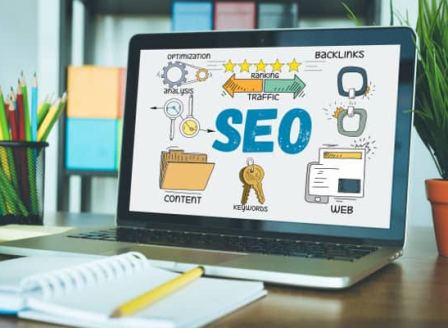 SEO takes time. Depending on your website, competition, industry, and the work involved, it can take several months to see meaningful improvements. There is no guaranteed position on Google's first page.
You'll also need to maintain your website, update outdated content, fix technical problems, and monitor your rankings. Publishing ten articles in a week won't automatically make your website successful.
SEO is therefore a better choice if you're prepared to build your online visibility progressively rather than expecting immediate results.
 Google Ads is a different approach. Instead of waiting for your website to rank naturally, you pay to display advertisements to people searching for products or services related to your business.
For example, a plumber in London could create a campaign targeting searches such as "emergency plumber near me". When someone searches for that service, the ad may appear prominently in the results.
This can be particularly useful when you need to generate enquiries quickly, launch a new service, or promote a seasonal offer.
 The biggest drawback is simple : traffic costs money. Every click can consume part of your advertising budget, and competitive keywords can become expensive.
There's another problem that businesses sometimes overlook. If you stop your campaigns, your paid visibility generally stops too. Unlike a well-positioned SEO page, an advertisement doesn't continue bringing visitors once you stop paying for it.
And paying for clicks doesn't guarantee sales. If your landing page is confusing, your prices are uncompetitive, or your offer doesn't meet the visitor's expectations, you can spend money without generating many customers.
 It's tempting to assume that SEO is free and Google Ads is expensive. In reality, the comparison is a little more complicated.
SEO doesn't involve paying Google for organic clicks, but it still requires resources. You may need to invest in content creation, technical improvements, SEO tools, or professional assistance.
Google Ads requires an advertising budget. You can start with a relatively small daily budget, but the amount needed to generate meaningful results depends on your industry, location, competition, and conversion rate.
Consider the following differences :
So, which one is cheaper ? It depends on what you measure. Google Ads can be more expensive over time if you rely on it for every visitor. SEO can require a substantial initial investment before it generates meaningful traffic.
 SEO is generally the better option if your objective is to build a lasting online presence.
It's particularly suitable for :
 Google Ads is often the better choice when timing matters.
Consider using it if :
 Absolutely. In fact, combining both strategies can be more effective than relying on just one.
SEO and Google Ads can support each other in several ways.
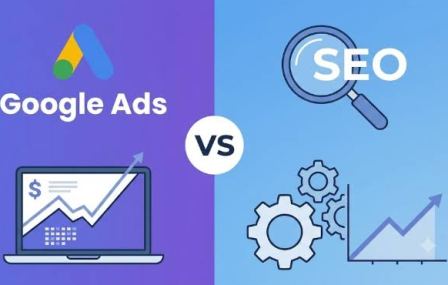 If I had to recommend just one strategy to a small business with a limited budget and no urgent need for customers, I'd start with SEO.
Why ? Because building useful content, improving your website, and developing organic visibility creates value that can last beyond a single advertising campaign. You aren't constantly paying for every visitor who discovers your business through search.
However, if you need enquiries quickly, Google Ads deserves serious consideration. Waiting for organic rankings isn't always practical, especially when your business has immediate commercial goals.
Here's the approach I'd recommend :
What Is the Difference Between SEO and Google Ads ?
SEO and Google Ads both aim to attract visitors from search engines, but they don't operate in the same way.
SEO involves improving your website so that it appears in Google's organic (unpaid) search results. This includes working on your content, website structure, loading speed, technical performance, and links from other websites.
Google Ads is Google's paid advertising platform. You create ads that can appear above or below organic search results when someone searches for specific keywords. You generally pay when someone clicks on your ad, depending on your campaign and bidding strategy.
Here's the main difference : with SEO, you invest time and effort to build visibility. With Google Ads, you pay to gain access to advertising space and reach potential customers.
SEO: A Long-Term Investment That Can Pay Off
SEO is particularly interesting if you want to attract visitors consistently without paying for every click.
Imagine you run a small online store selling office furniture. Someone searches for "best ergonomic office chair for home working". If your website has a useful, well-optimized article on that subject, it could appear in Google's organic results and attract visitors who are already interested in your products.
That's the strength of SEO: a good page can continue attracting traffic months or even years after publication, provided it remains relevant and competitive.
Why choose SEO?
- No direct cost per click : Organic visitors don't generate an advertising charge every time they visit your website.
- Long-term visibility : Well-positioned pages can continue generating traffic over time.
- Credibility : Many users are comfortable clicking organic results because they are not paid advertisements.
- Content value : Useful articles, guides, and comparison pages can attract visitors at different stages of their buying journey.
What are the limitations of SEO?
SEO takes time. Depending on your website, competition, industry, and the work involved, it can take several months to see meaningful improvements. There is no guaranteed position on Google's first page.
You'll also need to maintain your website, update outdated content, fix technical problems, and monitor your rankings. Publishing ten articles in a week won't automatically make your website successful.
SEO is therefore a better choice if you're prepared to build your online visibility progressively rather than expecting immediate results.
Google Ads : Get Visibility Without Waiting for SEO Results
Google Ads is a different approach. Instead of waiting for your website to rank naturally, you pay to display advertisements to people searching for products or services related to your business.
For example, a plumber in London could create a campaign targeting searches such as "emergency plumber near me". When someone searches for that service, the ad may appear prominently in the results.
This can be particularly useful when you need to generate enquiries quickly, launch a new service, or promote a seasonal offer.
Why choose Google Ads ?
- Faster visibility : Once your campaign is approved and running, your ads can start appearing in relevant searches.
- Precise targeting : You can target locations, keywords, audiences, and other campaign settings.
- Budget control : You can set campaign budgets and adjust your spending.
- Measurable performance : You can monitor clicks, conversions, and advertising costs.
What are the disadvantages of Google Ads ?
The biggest drawback is simple : traffic costs money. Every click can consume part of your advertising budget, and competitive keywords can become expensive.
There's another problem that businesses sometimes overlook. If you stop your campaigns, your paid visibility generally stops too. Unlike a well-positioned SEO page, an advertisement doesn't continue bringing visitors once you stop paying for it.
And paying for clicks doesn't guarantee sales. If your landing page is confusing, your prices are uncompetitive, or your offer doesn't meet the visitor's expectations, you can spend money without generating many customers.
SEO vs. Google Ads : Which One Costs More ?
It's tempting to assume that SEO is free and Google Ads is expensive. In reality, the comparison is a little more complicated.
SEO doesn't involve paying Google for organic clicks, but it still requires resources. You may need to invest in content creation, technical improvements, SEO tools, or professional assistance.
Google Ads requires an advertising budget. You can start with a relatively small daily budget, but the amount needed to generate meaningful results depends on your industry, location, competition, and conversion rate.
Consider the following differences :
| Criteria | SEO | Google Ads |
|---|---|---|
| Initial visibility | Usually gradual | Potentially quick |
| Cost per click | No direct advertising cost | Usually paid per click |
| Long-term traffic | Potentially sustainable | Depends on continued advertising |
| Budget control | Control over your investment, not rankings | Campaign budgets and bids can be adjusted |
| Competition | Competing for organic positions | Competing in advertising auctions |
| Best suited for | Long-term visibility | Immediate traffic and targeted campaigns |
When Should You Choose SEO?
SEO is generally the better option if your objective is to build a lasting online presence.
It's particularly suitable for :
- Businesses that want to attract visitors consistently over time.
- Blogs and websites that publish useful informational content.
- Online stores targeting customers through product-related searches.
- Small businesses that want to develop visibility without depending entirely on advertising.
- Companies willing to invest in a long-term marketing strategy.
When Does Google Ads Make More Sense ?
Google Ads is often the better choice when timing matters.
Consider using it if :
- You're launching a new website and don't have organic visibility yet.
- You need to generate leads within a short period.
- You want to promote a limited-time offer or seasonal product.
- Your business operates in a competitive local market.
- You want to test whether people are interested in a product or service before investing heavily in SEO.
Can You Combine SEO and Google Ads ?
Absolutely. In fact, combining both strategies can be more effective than relying on just one.
SEO and Google Ads can support each other in several ways.
- Use Google Ads for immediate traffic : Promote your most important services while your organic visibility develops.
- Build SEO content for the long term : Create useful pages that target the searches your potential customers make.
- Test keywords with paid campaigns : Advertising data can help identify search terms that generate valuable leads or sales.
- Improve landing pages : Use conversion data from advertising campaigns to identify weaknesses in your website.
SEO or Google Ads : My Recommendation for Small Businesses
If I had to recommend just one strategy to a small business with a limited budget and no urgent need for customers, I'd start with SEO.
Why ? Because building useful content, improving your website, and developing organic visibility creates value that can last beyond a single advertising campaign. You aren't constantly paying for every visitor who discovers your business through search.
However, if you need enquiries quickly, Google Ads deserves serious consideration. Waiting for organic rankings isn't always practical, especially when your business has immediate commercial goals.
Here's the approach I'd recommend :
- New business with an urgent need for customers : Start with a focused Google Ads campaign while preparing your SEO foundations.
- Small business with a limited budget : Prioritize SEO and target specific searches with clear commercial intent.
- Established business : Combine SEO and Google Ads to maintain organic visibility while capturing additional demand.
- Online store : Develop product and category page SEO, then use paid campaigns for products with good conversion potential.
Final Verdict : SEO or Google Ads ?
There isn't one universal winner. SEO is better for building long-term organic visibility, while Google Ads is better when you need targeted traffic quickly and have a budget to support it. If you can afford both, combining them is often the smartest approach. Use paid advertising to generate traffic in the short term and invest in SEO to build a more sustainable source of visitors. But remember one important thing : traffic alone isn't success. A website that attracts 500 relevant visitors who become customers can be far more valuable than one receiving 10,000 visits without generating a single enquiry. Ultimately, don't focus only on getting more visitors. Focus on attracting the right visitors and giving them a good reason to choose your business.